You know that spot right between your shoulder blade and neck that feels like someone’s pressed a marble under your skin? You’ve tried stretching it, pressing it, even asking a friend to “just push there a little harder.” Nothing works. The knot just… stays.
If this sounds familiar, you’re not imagining things, and you’re definitely not alone. In fast-paced neighborhoods like Perumbakkam, where long commutes on OMR, desk jobs, and packed schedules have become the norm, muscle knots technically called trigger points are quietly becoming one of Chennai’s most common (and most ignored) pain complaints.
This guide breaks down exactly what Trigger point therapy perumbakkam is, why these knots form, and how the right treatment can finally give you lasting relief not just a temporary fix.
Lorem ipsum dolor sit amet, consectetur adipiscing elit. Ut elit tellus, luctus nec ullamcorper mattis, pulvinar dapibus leo.
What Is a Trigger Point? (And Why Does It Hurt So Much?)
A trigger point is a small, tight band of muscle fiber that stays contracted even when the rest of the muscle is relaxed. Think of it like a tiny knot in a rope the surrounding rope can move freely, but that one knot stays locked, pulling on everything around it.
What makes trigger points tricky is something called referred pain. A trigger point in your neck might cause headaches. One in your shoulder might send pain shooting down your arm. One in your lower back might mimic hip or leg pain. This is exactly why so many people in Perumbakkam try painkillers, ice packs, or random stretches and still don’t get relief they’re treating the symptom location, not the actual source.
Trigger Point Therapy is a focused, hands-on technique where a trained therapist applies sustained, precise pressure directly onto these knots releasing the tension at its root rather than just relaxing the surface muscle.
What Causes Muscle Knots in Perumbakkam & Chennai Residents?
This isn’t a generic “everyone gets muscle pain” story there are real lifestyle patterns behind it:
- The OMR commute effect – long hours seated in traffic tightens hip flexors, lower back, and neck muscles
- IT and desk-based work culture – Perumbakkam’s proximity to major tech parks means hours of screen time, hunched shoulders, and “tech neck”
- New-apartment sedentary living – many residents in newer gated communities have less incidental walking than older, denser parts of Chennai
- Gym spikes without recovery – weekend-warrior workouts without proper mobility work often create fresh trigger points
- Humid Chennai weather – heat and dehydration can make muscles more prone to cramping and knotting
Trigger Point Symptoms: How to Know If You Have One

Look out for:
- A distinct, tender “pea” or “marble” you can feel under the skin
- Pain that travels a tight neck causing a headache, a tight glute causing leg pain
- A dull ache that gets worse with stress, poor sleep, or sitting too long
- Stiffness that doesn’t fully go away with regular stretching
- A “twitch” sensation when the point is pressed
If two or more of these sound familiar, it’s worth getting it professionally assessed rather than continuing to self-manage it.
What Happens During a Trigger Point Therapy Session?
- Assessment & Palpation The therapist gently feels through the muscle to map out your active trigger points -not guessing, but locating them precisely.
- Sustained Pressure Release Focused pressure is applied to each point and held usually 30-90 seconds – until the muscle fiber releases. This can feel intense, but in the “this-hurts-so-good” way, not sharp or alarming.
- Muscle Re-education (Stretching) Once the knot releases, gentle stretching helps the muscle relearn its natural, relaxed length – this is the step many people skip when they try to self-treat, which is why the knot keeps coming back.
- Personalized Aftercare You’ll typically get simple guidance on posture, hydration, and micro-movements to do at your desk or during your commute to prevent the trigger point from reforming.
Trigger Point Therapy vs Massage: What’s the Difference?
| Comparison | Regular Massage | Trigger Point Therapy |
|---|---|---|
| Goal | General relaxation | Targeted pain relief |
| Pressure | Broad, flowing strokes | Focused, sustained pressure |
| Area Covered | Whole body | Specific problem points |
| Best For | Stress relief & general wellness | Chronic knots, referred pain & recurring stiffness |
Both have their place – but if you have a specific recurring pain, trigger point therapy will usually get you results faster.
Which Massage Is Right for You? Trigger Point vs 3 Other
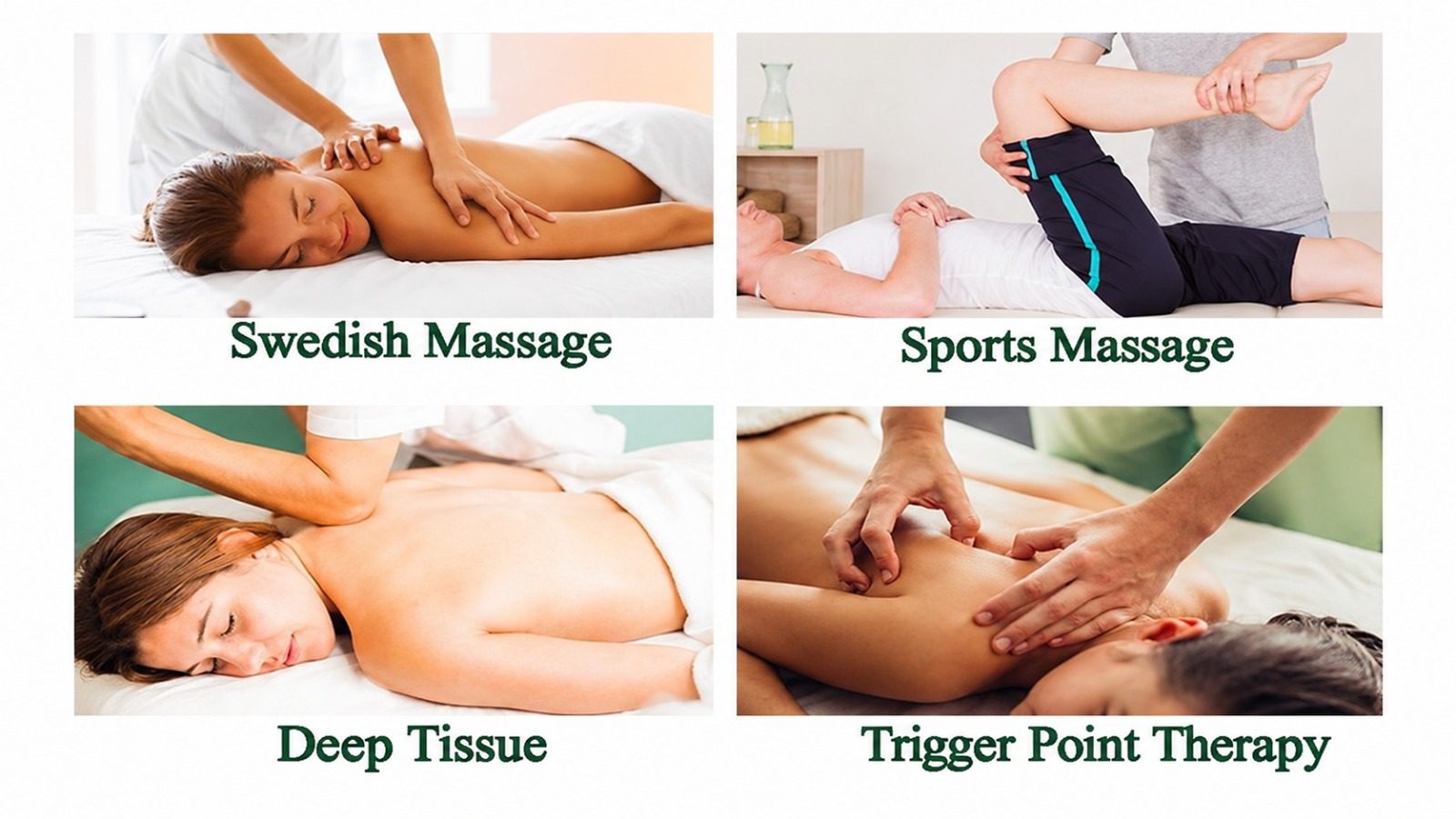
Not sure which type of massage actually fits your problem? Here’s a simple breakdown to help you choose the right one – instead of randomly booking whatever’s trending.
- Best for: Specific muscle knots, referred pain (like a neck knot causing headaches), recurring stiffness in one exact spot
- How it feels: Focused, sustained pressure directly on the knot – intense but relieving
- Choose this if: You can point to an exact spot and say “it hurts right here”
- Best for: Chronic muscle tension across a larger area (like the entire back or both shoulders), tightness from heavy workouts or manual labor
- How it feels: Firm, slow strokes that go deep into muscle layers
- Choose this if: Your whole back or shoulder region feels tight and heavy, not just one spot
- Best for: General relaxation, stress relief, improving circulation
- How it feels: Light to medium pressure with smooth, flowing strokes
- Choose this if: You’re not in pain, just mentally and physically drained and need to unwind
- Sports Massage perumbakkam
- Best for: Athletes or gym-goers – pre-workout prep, post-workout recovery, injury prevention
- How it feels: A mix of stretching, compression, and targeted pressure depending on your activity
- Choose this if: You’re training regularly and want to prevent injuries or recover faster between sessions
Quick Decision Guide:
| Your Situation | Best Massage Type |
|---|---|
| “There's one exact spot that hurts and even causes headaches” | Trigger Point Therapy |
| “My whole back/shoulders feel tight and heavy” | Deep Tissue Massage |
| “I'm just stressed and want to relax” | Swedish Massage |
| “I work out regularly and want to recover faster” | Sports Massage |
Many people in Perumbakkam actually benefit from a combination approach – for example, Swedish massage for overall relaxation plus targeted trigger point therapy for that one stubborn knot that won’t quit.
Before & After: Before: Woke up every morning with a stiff neck, couldn’t turn her head fully. After: 3 sessions later full range of motion, no more morning stiffness.
Benefits of Trigger Point Therapy for Pain Relief
- Faster, more targeted relief than general massage
- Fewer tension headaches and migraines
- Better posture and shoulder/neck mobility
- Reduced frequency of recurring pain flare-ups
- Improved sleep quality (pain-free muscles = better rest)
- Better performance if you work out, run, or play sports regularly
Trigger Point Therapy Myths vs Facts
“It should hurt a lot to work.” Not true. Effective pressure feels intense but should never be sharp, unbearable pain. More pressure doesn’t mean better results.
“One session will fix it permanently.” Chronic trigger points, especially ones you’ve had for months or years, usually need a few sessions plus some habit changes (posture, movement breaks) for lasting results.
“It’s the same as a regular spa massage.” As the comparison table above shows, the technique, intent, and results are quite different.
Best Trigger Point Therapy Near Me in Perumbakkam

If you’re searching for trigger point therapy near you, Wings Family Salon and Spa in Perumbakkam is your go-to destination for lasting muscle and pain relief. Here’s why getting treated right in your neighborhood makes all the difference:
- Consistency – Trigger points respond best to regular, spaced-out sessions, which is only realistic when the clinic is close to home or work.
- No added strain – Traveling far across Chennai traffic for pain relief often undoes the benefit of the session itself.
- Local understanding – Therapists familiar with Perumbakkam’s everyday lifestyle patterns long IT commutes, desk jobs, sedentary apartment living can tailor every session accordingly.
- Easier follow-through Real results come from consistent aftercare, which only works if you can realistically stick to a routine nearby.
Whether it’s a stubborn knot in your shoulder or recurring tension headaches, expert care close to home means real, lasting relief.
How to Relieve Muscle Knots at Home Naturally

- Take a 2-minute stretch break every hour if you work at a desk
- Keep your laptop screen at eye level to reduce neck strain
- Stay hydrated dehydrated muscles cramp and knot more easily
- Use a tennis ball or foam roller gently on known tight spots
- Avoid sitting in the same position for your entire commute shift posture when you can
Frequently Asked Questions
- How many sessions of trigger point therapy will I need
It depends on how long you’ve had the trigger point and how severe it is. Mild, recent knots may improve in 1-2 sessions, while chronic ones may need 4-6 sessions spaced a week apart.
- Is trigger point therapy painful?
It can feel intense during the pressure release, but it shouldn’t be sharp or unbearable. Most people describe it as “good pain” followed by noticeable relief.
- Can trigger point therapy help with headaches?
Yes many tension headaches and even some migraines originate from trigger points in the neck and upper shoulders (referred pain), so treating those points can significantly reduce headache frequency.
- How is this different from physiotherapy?
Physiotherapy often focuses on rehabilitation and functional movement after injury, while trigger point therapy specifically targets muscle knots causing pain though the two are often used together.
- Who should avoid trigger point therapy?
People with certain conditions (acute injuries, infections, blood clotting disorders, or recent surgery in the treatment area) should consult a doctor first. Always inform your therapist of any medical conditions before starting.
Is Trigger Point Therapy Worth It? Final Thoughts
Muscle knots aren’t something you have to “just live with.” They’re your body’s way of signaling an underlying strain pattern and Trigger point therapy addresses that pattern directly, rather than temporarily numbing it.
If you’re in Perumbakkam, Chennai and have been dealing with a stubborn muscle knot, recurring headaches, or stiffness that never fully goes away, it might be time to get it looked at by someone who can actually treat the source not just the symptom. The right trigger point therapy near you can make all the difference.
Ready to finally get rid of that stubborn knot? Book a trigger point therapy session near you in Perumbakkam and feel the difference in just one visit.